
Academic credentials have traditionally relied on trusted institutions, official documents, and manual verification processes. A university awards a degree, maintains student records, and confirms academic history when another organization needs proof. This system has supported education and employment for decades, but it was built around a world where records were usually exchanged through direct communication between institutions.
Modern education and employment have made credential verification more complicated. Students now complete programs across different countries, participate in online learning, and apply for jobs or further education far from the institutions they attended. Employers, universities, and professional organizations may need to confirm academic records from unfamiliar systems, while individuals often have to request transcripts or verification documents repeatedly throughout their careers.
Digital credentials, blockchain technology, and digital identity systems are being explored as possible ways to improve this process. These technologies are not intended to replace universities or remove the authority of educational institutions. Their purpose is to make academic achievements easier to share, easier to verify, and more closely connected to the individuals who earned them.
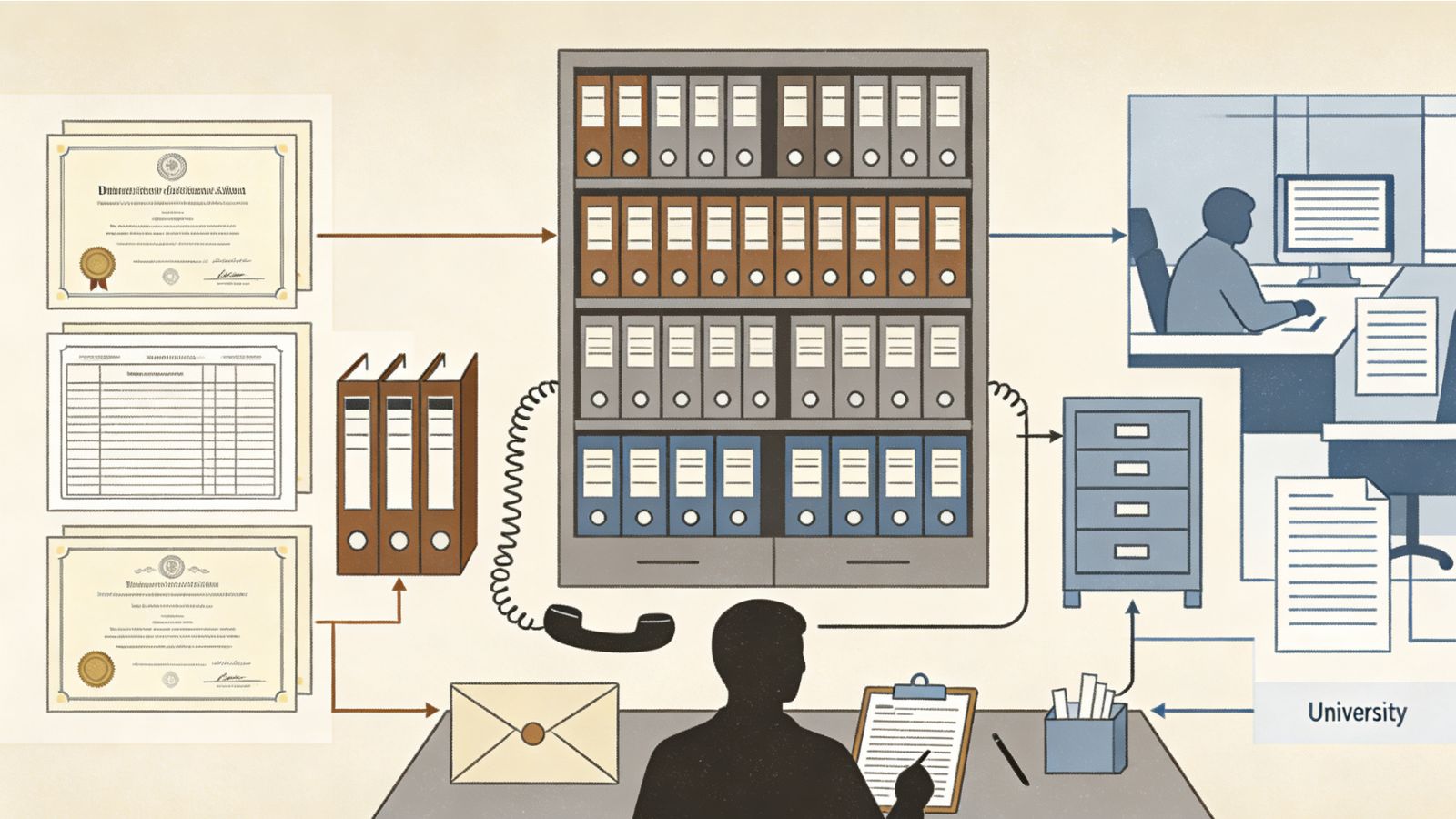
Most academic verification systems depend on centralized records managed by educational institutions. When a graduate applies for employment, transfers to another school, or seeks professional recognition, the receiving organization usually relies on confirmation from the institution that issued the credential.
This approach works because universities and colleges serve as official sources of academic information. Their responsibility goes beyond storing records; they must ensure that credentials accurately represent completed programs and legitimate achievements. However, traditional verification can become difficult when information must move between different organizations, countries, or administrative systems.
A verification request may require staff members to locate records, confirm details, and communicate through approved procedures. Older academic documents can create additional complications when institutions have updated their record systems or changed how information is stored. International verification often requires additional steps because education structures, degree classifications, and documentation standards differ across regions.
Credential fraud has also increased the need for stronger verification methods. Fake diplomas and altered academic documents have existed for many years, creating challenges for employers, universities, and licensing organizations. Digital systems cannot determine whether information was originally entered correctly, but they can provide stronger ways to confirm where a record came from and whether it has been changed after issuance.
Blockchain is a distributed ledger technology that allows information to be recorded across a network rather than controlled by a single database administrator. Although it became widely known through cryptocurrency, the same underlying concepts have attracted interest in areas such as record management, authentication, and digital verification.
In academic credential systems, blockchain is generally not used to store complete transcripts or diplomas. Instead, it can store verification details or create a secure connection between a digital credential and the organization that issued it.
A university, for example, could create a digital credential containing information about a degree, the issuing institution, and the date it was awarded. The graduate could then share that credential with an employer, another university, or a professional organization. The receiving party could verify the record through a digital system instead of depending entirely on separate manual confirmation processes.
This approach may reduce administrative work and give individuals more control over their academic history. Someone applying for several positions or educational programs would not necessarily need to request new verification documents each time proof of qualifications is required.
However, blockchain does not automatically make academic information accurate. The technology can help show that a record has remained unchanged after issuance, but it cannot confirm whether the original information was correct. If an institution creates an inaccurate credential, blockchain may preserve that incorrect information. The credibility of the issuing organization remains a necessary part of the verification process.
Academic credentials are useful because they are connected to specific individuals. A digital diploma or certificate has limited value if employers or educational institutions cannot determine whether the person presenting it is actually the person who earned it.
Digital identity systems address this challenge by providing methods for proving identity in online environments. In credential verification, digital identity helps connect academic achievements with individuals while allowing them to decide when and with whom their information is shared.
Many newer approaches involve decentralized identity models, where individuals manage digital credentials through secure systems rather than relying completely on a single organization to store and control their records. The goal is to create a balance between convenience, privacy, and reliable verification.
Consider an international student applying to a graduate program in another country. The receiving university may need to confirm previous academic qualifications from an institution it has never worked with before. Under a traditional process, the student may need to arrange document transfers, provide translations, and wait for communication between institutions. A verifiable digital credential could simplify part of this process by allowing the applicant to share a record that identifies the issuing institution and provides a method for independent confirmation.
This technology would not replace academic evaluation. Admissions teams would still review whether an applicant’s education meets their requirements. The difference is that confirming whether a credential is authentic could become more efficient.
Digital credentials are not simply electronic versions of paper documents. A PDF transcript can show that a document exists, but a verifiable credential is designed to show who issued the record and whether the information can be independently checked.
This distinction is important because ordinary digital files can be copied, edited, or shared without providing a reliable way to confirm their origin. A verifiable credential is created with authentication in mind, allowing recipients to examine the connection between the credential, the issuer, and the individual presenting it.
Several educational institutions and technology organizations have explored digital credential systems. The Massachusetts Institute of Technology has participated in early digital credential efforts, including the Blockcerts project, which examined blockchain-based academic certificates that graduates could receive and verify independently.
The project demonstrated a different approach to sharing academic achievements. Instead of relying only on institutions sending confirmations whenever verification is needed, graduates could hold digital records that could be presented directly to authorized recipients. The significance of this approach is not replacing universities, but creating a more flexible way for legitimate academic records to move between organizations.
For broader adoption, digital credentials require common technical standards. A credential created by one institution should ideally be understandable and verifiable by employers, universities, and other organizations without requiring completely separate systems for every participant.
Despite their potential advantages, blockchain and digital identity systems face several practical challenges. Adoption remains one of the biggest barriers because universities and organizations often use different technologies, administrative processes, and approaches to managing academic information.
A widely accepted credential system requires cooperation among multiple groups. Educational institutions need reliable processes for issuing records, employers need confidence in verification methods, and technology providers need systems that can work across different platforms.
Privacy is another important consideration. Academic records often contain personal information, and digital credential systems must protect that information while still allowing efficient verification. Collecting or storing unnecessary details could create additional concerns, especially when records are designed to remain available over long periods.
Accessibility also matters. Students, employers, and institutions do not all have the same level of technical resources or experience. A successful system must be secure without becoming difficult for ordinary users to understand and operate.
These challenges show that improving credential verification is not only a technical issue. It also requires clear standards, responsible institutions, and practical solutions that work for different types of users.
Digital credential systems are more likely to expand existing verification practices than completely replace traditional methods. Universities will continue to play the central role of issuing and validating qualifications, but the way those qualifications are stored and shared may become more flexible.
For students and professionals, verifiable credentials could provide greater control over educational records. Instead of depending on multiple organizations to confirm achievements separately, individuals may be able to carry verified academic information throughout their education and professional lives.
Employers and educational institutions could also benefit from faster verification processes and easier evaluation of candidates from different backgrounds. The value of these systems will depend not only on the technology but also on whether organizations create reliable standards and maintain confidence in the information being exchanged.
Academic credentials have always depended on institutional credibility. Blockchain and digital identity may change how that credibility is communicated, allowing qualifications to move more efficiently while preserving the important role of the institutions that issue them.
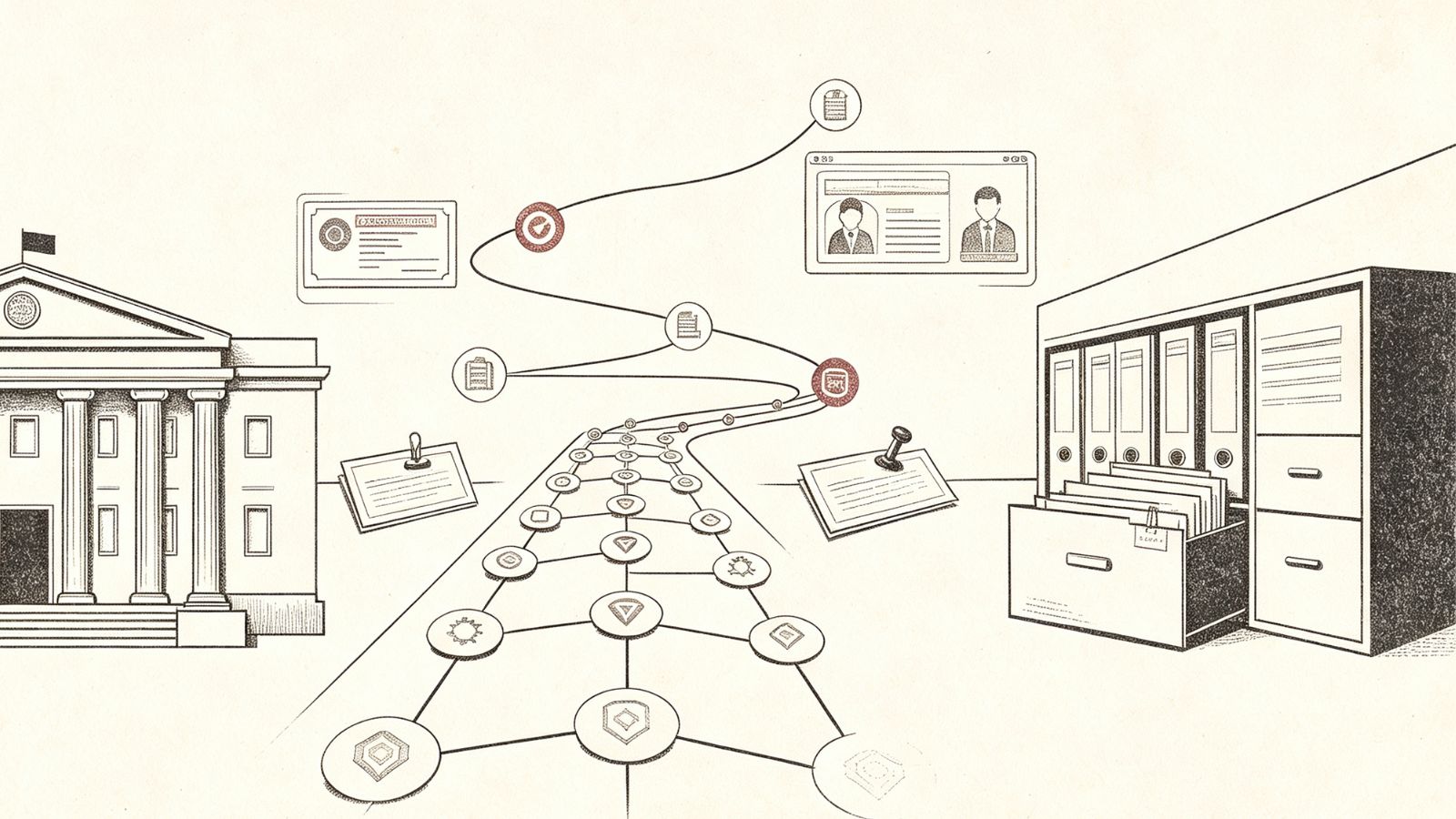
Verifiable academic records represent a shift in how educational achievements can be managed and confirmed. Blockchain can support the integrity of digital records, while digital identity systems can help connect those records with the individuals who earned them.
These technologies are not replacements for universities, transcripts, or academic oversight. Their role is to improve verification by making credentials easier to share, easier to check, and more suitable for an increasingly connected education and employment environment.
The direction of credential verification will likely be shaped by how well institutions balance easier sharing with privacy and accountability. When technology works alongside strong academic standards, digital credentials may become a useful addition to the way people demonstrate their education and qualifications.