
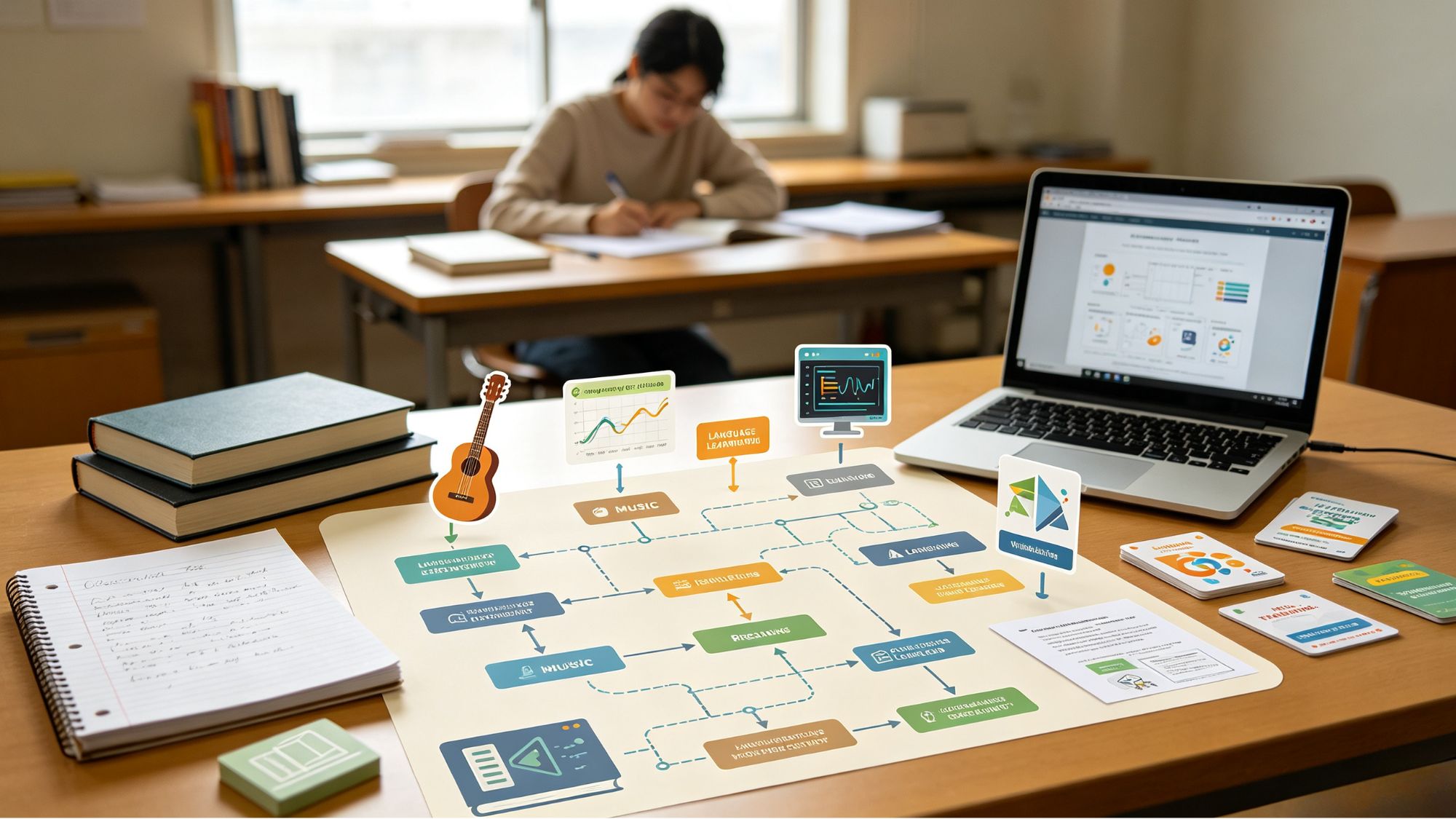
Learning a complex skill often feels overwhelming because the finished ability appears as one complete performance. Whether watching a surgeon perform a procedure, observing a developer build a large software system, or listening to an experienced musician play a difficult piece, beginners often see the result as a single talent rather than a combination of smaller capabilities.
This perception creates a common learning problem. Instead of identifying the specific elements that need improvement, many people attempt to practice the entire skill at once. The result is often slow progress, repeated mistakes, and difficulty identifying what is preventing improvement.
A more effective approach is skill decomposition: breaking a complex ability into smaller, trainable components. By identifying the essential subskills, prioritizing the most valuable areas, creating focused practice routines, and gradually combining individual abilities, learners can develop expertise in a more structured and efficient way.
Complex skills require multiple forms of attention at the same time. A beginner learning tennis, for example, must think about foot positioning, racket movement, timing, ball direction, and decision-making during every point. Because many elements compete for attention, it becomes difficult to improve any single part effectively.
Research in cognitive psychology suggests that working memory has limited capacity. When too many unfamiliar tasks must be processed simultaneously, learners may focus on simply completing the activity rather than improving the underlying technique.
Skill decomposition reduces this difficulty by separating complicated activities into smaller learning targets. Instead of trying to master an entire performance immediately, learners can focus on individual components, receive clearer feedback, and gradually build more reliable patterns.
The same principle applies across different fields. A person learning a new language may separate pronunciation, vocabulary recall, listening comprehension, and conversation skills instead of only practicing complete conversations. A programmer may improve by studying debugging, data structures, and system design separately before building larger applications.
The first step in skill decomposition is understanding what actually creates successful performance. A skill should not be analyzed only by its final appearance but by the smaller actions, decisions, and knowledge areas that support it.
A useful analysis process includes three questions:
What actions directly contribute to successful results?
Breaking down the final outcome reveals the immediate abilities required to achieve it.
Where do beginners usually make mistakes?
Common failure points often reveal the most important areas for improvement.
Which components can be practiced independently?
If a specific element can be isolated and repeated separately, it is likely a useful training unit.
For example, public speaking is not simply “giving a presentation.” It includes several smaller abilities, such as organizing ideas, controlling speaking pace, using effective transitions, maintaining audience attention, and responding to questions.
By separating these elements, learners can practice specific weaknesses rather than repeating the entire activity without understanding what needs improvement.

After identifying the different components of a skill, the next challenge is deciding where to focus first. Not every subskill contributes equally to overall performance.
Some abilities function as foundations that influence many other areas. Improving these high-impact components often creates broader improvement than practicing smaller details.
The Pareto Principle is sometimes used as a general way to think about this process. Rather than treating every learning element equally, learners can look for the small number of foundational skills that contribute significantly to progress.
For instance, someone learning graphic design may spend hours experimenting with visual effects, but understanding layout structure, spacing, and typography principles may provide greater long-term improvement. Similarly, a writer may improve faster by developing research and organization skills before focusing heavily on sentence-level editing.
When choosing which subskills to prioritize, learners should consider:
How frequently the skill appears during actual performance.
Whether improving it helps other abilities develop.
Whether weaknesses in this area create problems elsewhere.
Focusing on these foundational elements creates a more efficient learning path.

Once important subskills are identified, practice should become more targeted. Simply repeating the entire activity does not always provide enough information about what needs to change.
Focused practice works best when learners create smaller exercises designed around one specific improvement goal.
An effective practice loop usually includes three elements:
Learners need information about whether they performed the skill correctly. Feedback may come from a teacher, coach, software tool, recording, or self-review process.
For example, a language learner can record pronunciation exercises and compare improvements over time. A programmer can use testing tools to identify errors immediately after writing code.
Reducing unnecessary complexity allows learners to focus on the specific skill being developed.
A basketball player practicing free throws does not begin by playing a full competitive game. A photographer improving composition may practice framing techniques before managing complex lighting conditions.
Creating controlled environments allows attention to remain on the targeted ability.
A useful drill should allow multiple attempts within a short period. Frequent repetition helps learners identify patterns, correct mistakes, and gradually improve consistency.
The goal is not simply performing more repetitions, but creating more opportunities to adjust and refine technique.

Although breaking skills apart is valuable, isolated practice alone is not enough. Real-world performance requires combining multiple abilities under changing conditions.
A musician may practice individual techniques separately but eventually needs to perform an entire composition. A software developer may study individual programming concepts but must eventually integrate them into a complete system.
The final stage of skill development is reintegration.
Two approaches are particularly useful:
Progressive chaining: Combining individual skills step by step. For example, a public speaker may first practice organizing ideas, then combine structure with delivery, and finally add audience interaction.
Variable practice: Introducing different situations, environments, and challenges so the skill becomes adaptable rather than dependent on one specific condition.
This transition helps learners move from controlled practice environments into real-world situations where multiple demands appear simultaneously.
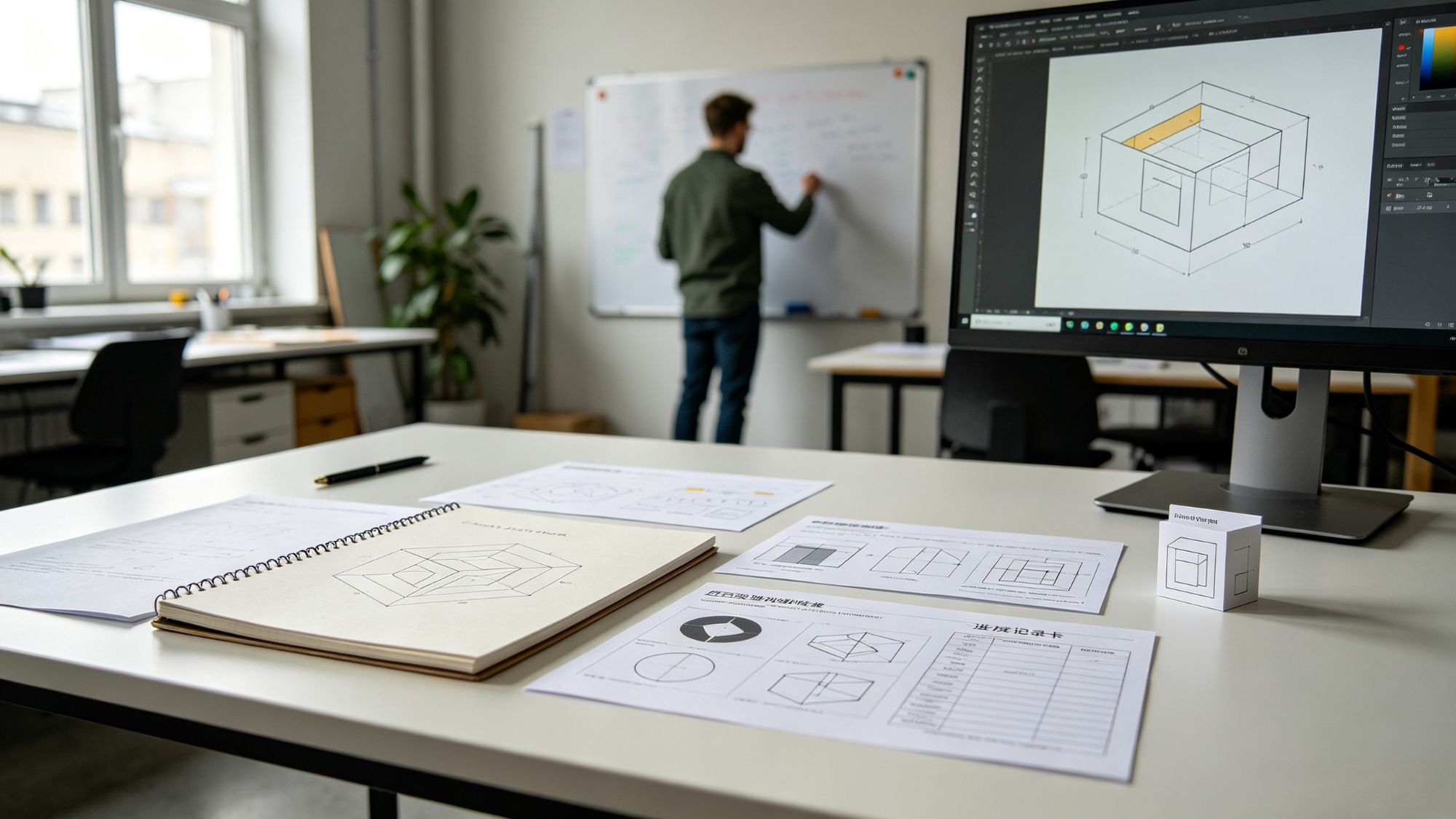
Complex skills become easier to develop when they are treated as collections of smaller, trainable abilities rather than a single overwhelming challenge. Skill decomposition allows learners to identify important components, focus practice on high-impact areas, create clearer feedback systems, and gradually combine individual abilities into complete performance.
Whether learning a professional discipline, developing a creative ability, or improving everyday skills, progress depends not only on the amount of time invested but also on how effectively practice is structured. Breaking complex abilities into manageable parts provides a practical framework for more focused, efficient, and sustainable learning.