
Contemporary educational technology is rapidly evolving far beyond the conventional confines of static digital textbooks and pre-recorded video lectures. The next generation of learning tools is increasingly architected around intelligent software agents, spatial computing interfaces, and immersive virtual environments that empower learners to interact with complex instructional information in profoundly natural and contextual ways. Rather than functioning as a disruptive force destined to replace human educators, these emerging technologies are fundamentally transforming how instructional content is delivered, how formative feedback is generated, and how students acquire complex professional skills.
The most critical paradigm shift is not simply that digital learning has become more ubiquitous, but rather that it has grown significantly more adaptive, persistent, and experiential. Advanced artificial intelligence can now deliver granular, individualized guidance at scale, while spatial computing interfaces seamlessly anchor three-dimensional virtual objects directly into a learner's physical room. Furthermore, immersive simulations grant students safe, repeatable access to high-stakes environments that would otherwise be prohibitively expensive, physically hazardous, or practically impossible to recreate in traditional classrooms. Comprehending the true trajectory of these technologies requires looking far past corporate marketing hype to rigorously evaluate where they genuinely elevate cognitive retention and where substantial structural limitations persist.
Traditional educational software has historically operated within rigid, predefined decision pathways, responding to user inputs through simplistic branching logic. Modern AI learning agents function through fundamentally different cognitive mechanisms. Instead of merely scoring multiple-choice quizzes or recommending a generic subsequent lesson, an intelligent agent can interpret nuanced student inquiries, diagnose root conceptual misconceptions, generate bespoke explanations, monitor long-term progress across multidisciplinary activities, and dynamically adjust its scaffolding over time.
A well-architected AI learning agent behaves less like a basic search engine query tool and more like an attentive academic assistant. For instance, a university biology student struggling with cellular division can ask for a simplified conceptual analogy, request targeted practice questions addressing specific weak points, compare mitosis and meiosis side by side, and receive immediate, diagnostic feedback—all within a single, continuous conversational thread. The underlying system maintains strict contextual memory rather than treating each student prompt as an isolated, stateless request.
This technological capability makes hyper-personalization practically viable across massive institutional scales. While exceptional human instructors have always intuitively adapted their explanations for individual students, doing so consistently across hundreds of enrolled learners is an impossible operational burden. AI agents can bridge this gap by providing immediate formative feedback during independent study sessions, thereby liberating human teachers to focus their limited energy on high-level Socratic discussion, critical mentorship, and complex problem-solving. However, algorithmic personalization must never be confused with autonomous teaching. AI systems remain entirely dependent on the quality of their underlying models, rigorous instructional design, and vigilant human oversight. They retain a propensity to generate convincing hallucinations or subtle contextual errors, making critical verification an indispensable component of responsible academic adoption.
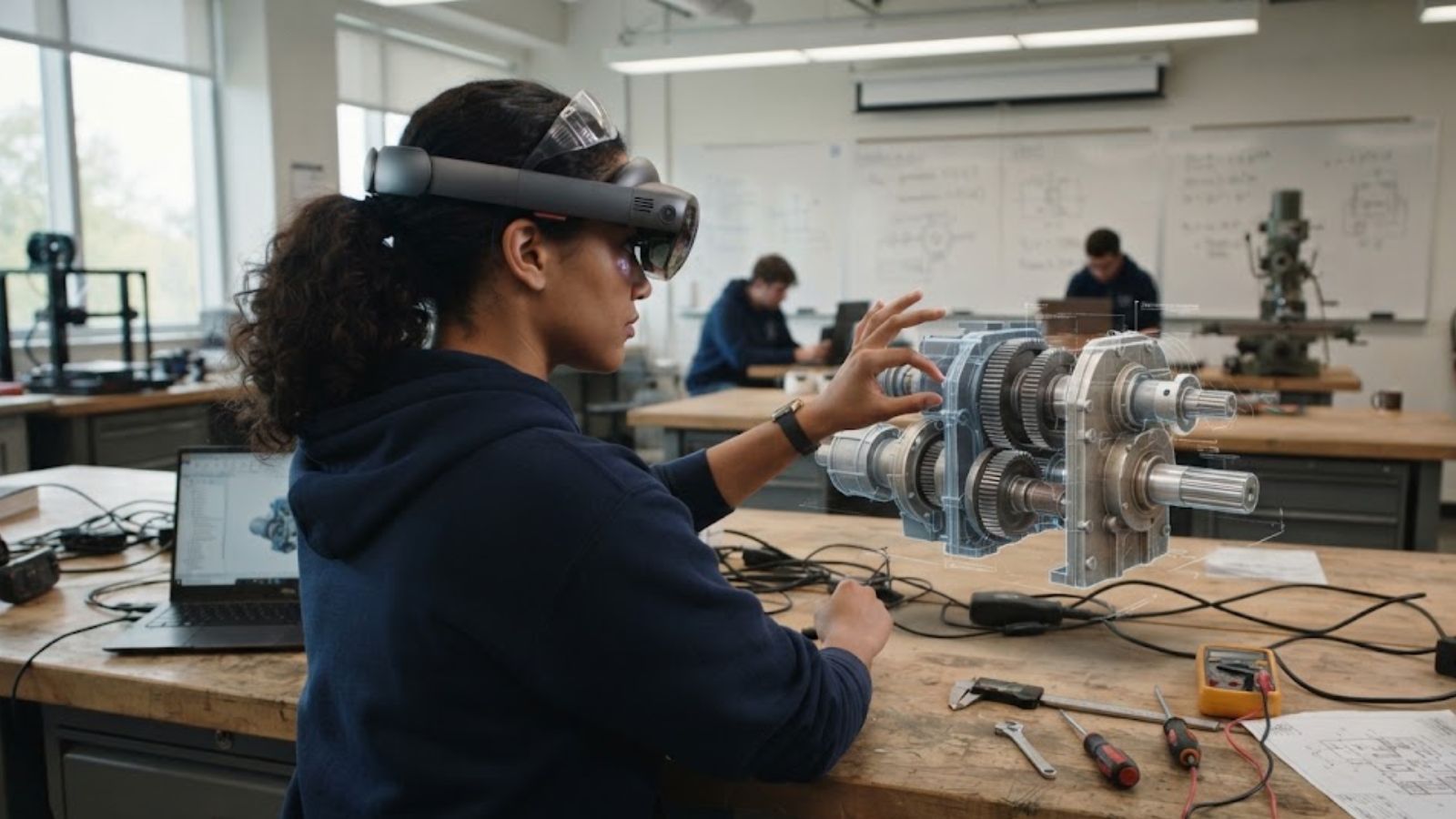
Spatial computing encompasses immersive digital experiences designed to understand, map, and interact natively with three-dimensional physical space. This broad technological category includes augmented reality, mixed reality, and sophisticated optical overlays that anchor persistent virtual objects within the user's immediate environment. Unlike conventional flat screens, spatial interfaces empower students to manipulate digital information as if it occupied physical volume right in front of them.
An engineering student can inspect a full-scale industrial turbine from every conceivable vector, peeling back virtual casing layers to examine internal fluid dynamics. A medical resident can visualize complex anatomical vascular structures superimposed directly onto a physical training mannequin. An architecture student can physically walk through the interior of a proposed building before a single foundation is excavated. The true educational value delivered by these systems stems from enhanced spatial reasoning rather than superficial visual novelty. Many academic and vocational disciplines require an intimate understanding of spatial relationships, volumetric proportions, physical motion, and structural mechanics. Visualizing these complex concepts in three dimensions dramatically reduces the cognitive load required to translate flat textbook diagrams into actionable mental models. Consequently, spatial computing holds immense promise for fields such as geometry, mechanical engineering, human anatomy, archaeology, industrial design, and environmental sciences.
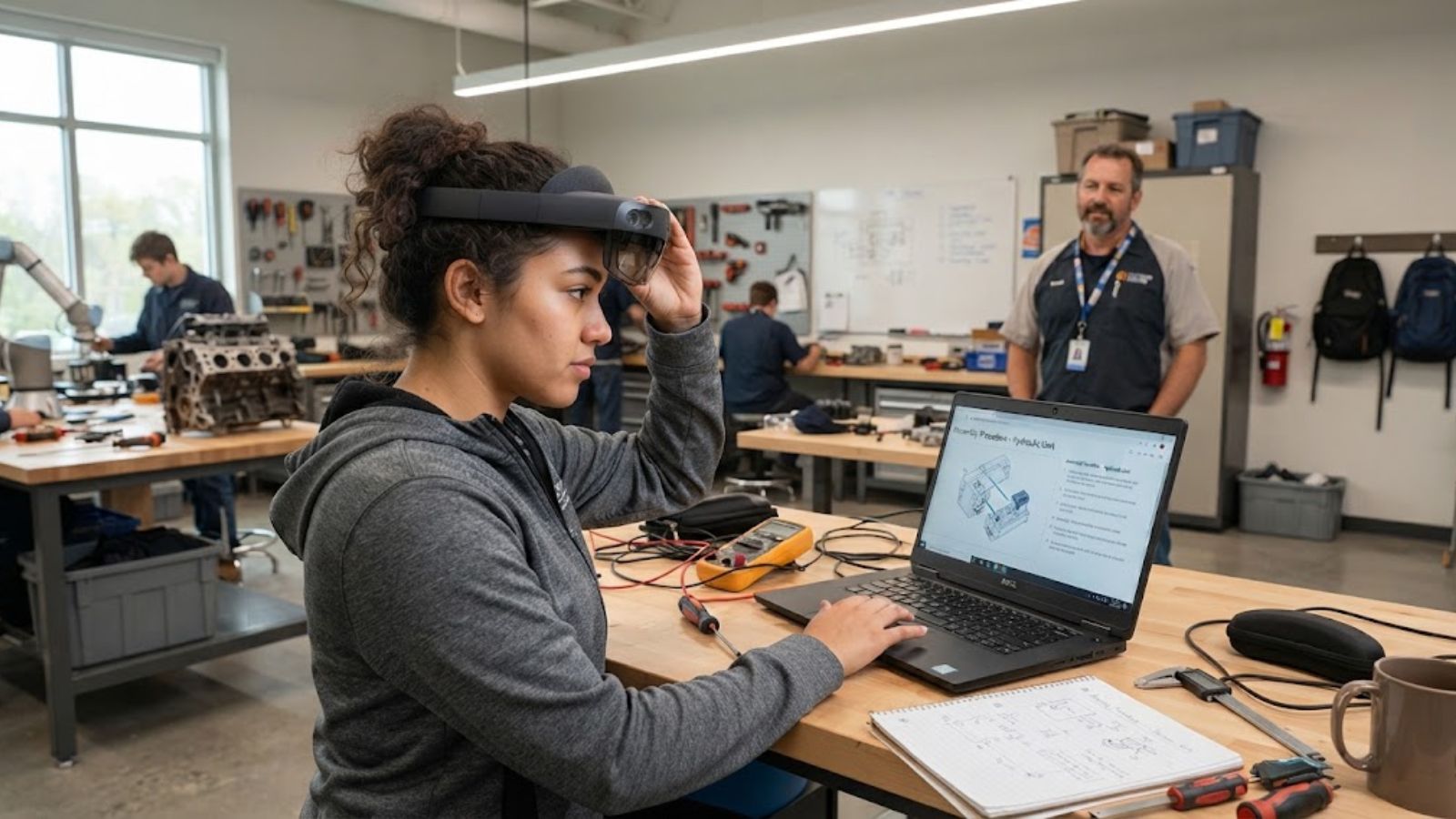
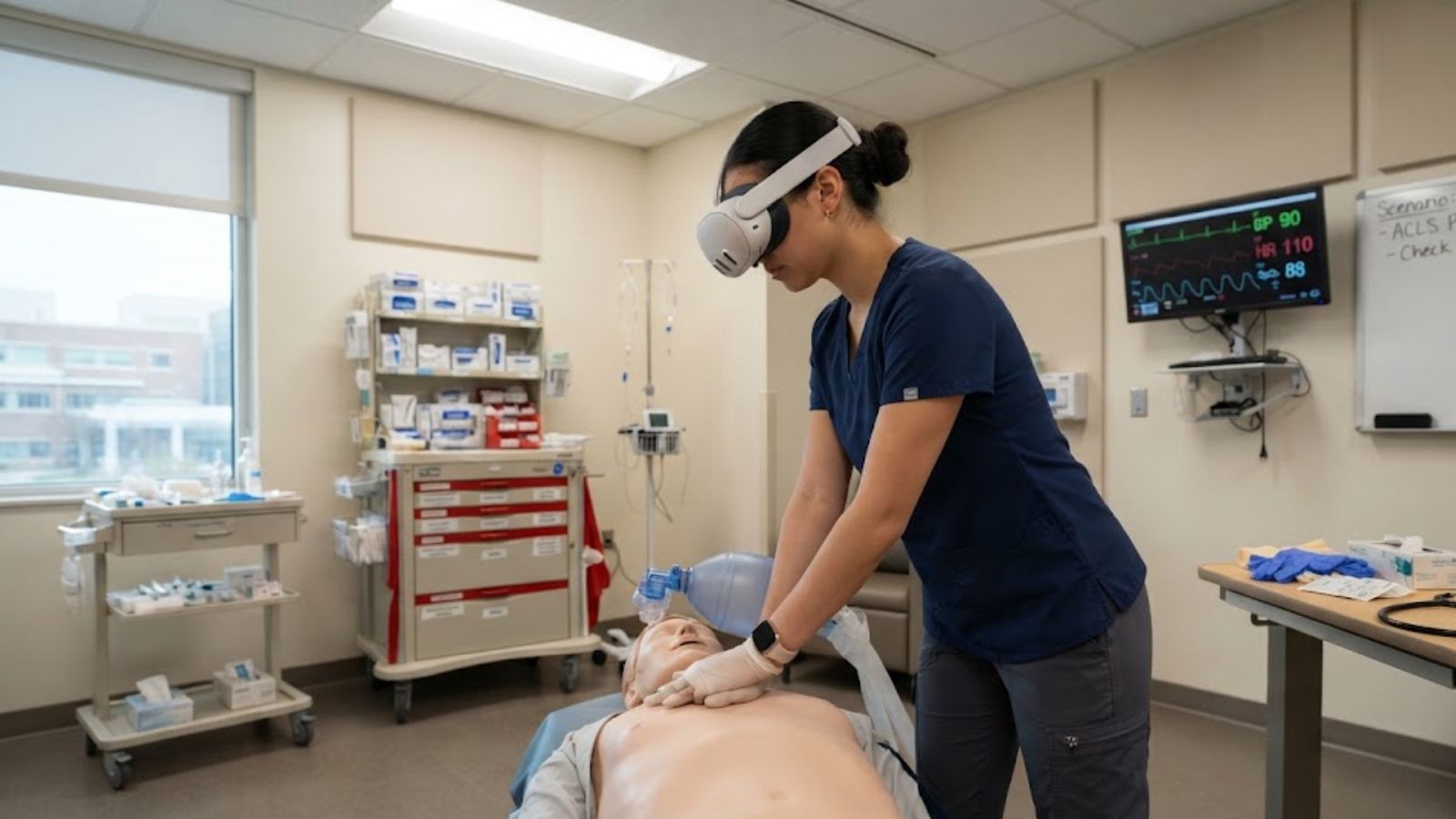
Virtual reality and immersive environments have frequently been marketed as flashy, entertaining alternatives to traditional schoolhouses, yet their most robust educational applications are anchored in profound practical utility. Immersive learning systems deliver maximum pedagogical impact when they enable students to safely rehearse high-stakes scenarios that are financially prohibitive, physically hazardous, or impossible to replicate in the physical world. Consider the rigorous demands of emergency disaster response training. A first-responder cadet can repeatedly experience chaotic, high-pressure crisis scenarios without exposing human participants to genuine physical danger. Aviation students can practice executing emergency engine-failure protocols before ever stepping foot inside a physical aircraft cockpit, while manufacturing technicians can master the operation of heavy industrial machinery in simulated facilities while internalizing vital safety compliance protocols.
The foundational distinction in this domain lies between mere immersion and genuine instructional realism. An effective educational simulation does not demand Hollywood-grade photorealistic graphics to succeed; what matters is whether the digital environment accurately simulates the decision-making constraints, operational friction, and concrete consequences that learners must master to achieve competence. Well-designed simulations prioritize authentic task interactions over dazzling visual spectacles.

Future educational architectures are rapidly transforming from isolated collections of standalone digital tools into unified collaborative ecosystems. Advanced AI agents are increasingly engineered to support collaborative groups rather than serving solitary users in isolation. Imagine a team of business administration students preparing a comprehensive market analysis report. Instead of each student working within an isolated silo, an intelligent AI facilitator can summarize previous team meetings, organize disparate research sources, identify unaddressed strategic questions, assign follow-up tasks, and synthesize comparative matrices based on the group's shared documents. The AI actively supports teamwork without outsourcing or replacing the students' rigorous analytical labor.
Furthermore, in project-based learning environments, intelligent systems can monitor collaborative engagement, detect severe workload imbalances, recommend relevant supplementary resources, and alert instructors to struggling syndicates long before academic failure occurs. This represents a massive evolutionary leap beyond legacy learning management systems that function primarily as static digital filing cabinets for syllabi and gradebooks. The modern learning platform becomes an active, intelligent participant in organizing the educational workflow.
These advanced multi-modal experiences rely upon a sophisticated underlying technical infrastructure rather than flashy consumer headsets alone. High-performance cloud computing engines allow complex physics simulations and localized AI inference to execute smoothly without requiring expensive local client hardware. Real-time rendering architectures ensure that interactive three-dimensional environments respond instantaneously to student inputs without perceptible latency. Meanwhile, advanced learning analytics systems track longitudinal progress across diverse modalities, including written text, spoken audio, virtual simulations, and collaborative workspaces. Open interoperability standards ensure that educational assets migrate fluidly between platforms rather than remaining trapped inside proprietary vendor silos.
Despite rapid technological progress, immersive and AI-driven educational environments face significant practical obstacles that institutions cannot afford to ignore. Advanced hardware remains a major financial barrier for many schools and underserved districts, forcing administrators to weigh whether specialized immersive tools are strictly necessary or if comparable learning outcomes can be achieved using widely accessible devices. Furthermore, accessibility extends far beyond basic procurement costs. Students with visual, auditory, motor, or cognitive disabilities interact with immersive environments through distinct pathways, demanding inclusive interface design rather than assuming a universal technological standard.
The collection of vast behavioral datasets by AI tutors and immersive platforms also raises profound privacy and governance concerns. These systems record granular interaction patterns, vocal inflections, spatial movements, and psychological problem-solving sequences. Schools must establish rigorous data governance frameworks that explicitly define what telemetry is harvested, retention timelines, access permissions, and algorithmic transparency. Finally, institutional readiness remains a major hurdle. Successful implementation depends entirely on educators who understand when advanced tools genuinely enhance pedagogy over simpler, traditional methods. Consequently, ongoing professional development is just as critical as hardware procurement, ensuring teachers are empowered to design meaningful learning experiences rather than merely learning how to operate novel gadgets.