
Digital instructional design frequently falls victim to the superficial assumption that adding more sensory channels automatically yields superior educational outcomes. Course creators often assume that if a written textbook chapter is good, supplementing it with a recorded lecture, a background animated video, an accompanying podcast, and a handful of gamified widgets must somehow quadruple the learning speed. However, contemporary cognitive science and instructional design research demonstrate that uncoordinated media deployment does not enrich comprehension; rather, it frequently fractures student attention. Multi-modal learning systems succeed or fail entirely based on how deliberately distinct instructional formats—such as text, spoken audio, video demonstrations, and interactive simulations—are orchestrated to serve specific cognitive functions without triggering cognitive overload.
The foundational premise of multi-modal instruction relies on how the human brain processes information through distinct visual and verbal working memory channels. When instructional designers haphazardly dump redundant information across competing channels—such as displaying dense on-screen text while simultaneously narrating the exact same sentences over an irrelevant background animation—they inadvertently generate split-attention effects that degrade performance. A truly sophisticated multi-modal system avoids this trap by treating each digital format as an intentional tool designed for a specific pedagogical job. Text excels as a durable, searchable reference layer; video clarifies complex physical procedures and dynamic temporal changes; audio provides convenient portable reinforcement; and interactive exercises mandate active cognitive processing.

Maximizing the efficacy of a multi-modal learning environment begins by establishing clear, non-overlapping operational roles for every medium integrated into the curriculum. Written text should serve as the stable anchor of the instructional ecosystem. Learners inherently require a durable reference layer where they can independently scan structural headings, reread complex analytical passages, copy exact definitions, and control their own cognitive pacing without being rushed by the relentless playback speed of a pre-recorded video clip. Even when an instructional unit is primarily delivered via dynamic video or interactive software, a concise written transcript or reference guide remains indispensable for long-term knowledge consolidation.
Video, by contrast, should be deployed selectively when witnessing a dynamic physical movement, spatial transformation, or software workflow is genuinely required for comprehension. A technical engineering curriculum benefits immensely from showing the precise assembly of complex mechanical components, just as a software tutorial benefits from a visual screencast demonstrating an intricate user interface workflow. Yet, long-form educational videos characterized by passive viewing and zero interactive checkpoints routinely foster an illusion of competence, where learners mistake watching an expert perform a task for mastering the underlying cognitive principles themselves.
Audio functions as a uniquely flexible delivery mechanism, making complex explanations accessible during commutes, physical exercise, or routine daily tasks, though demanding subjects will always require visual scaffolding to prevent cognitive drift. Finally, interactive components bridge the massive chasm between passive comprehension and active skill acquisition. An interactive problem-solving environment forces learners to make binding decisions, manipulate real-time variables, and confront immediate feedback, transforming abstract theoretical knowledge into robust, operational capability.
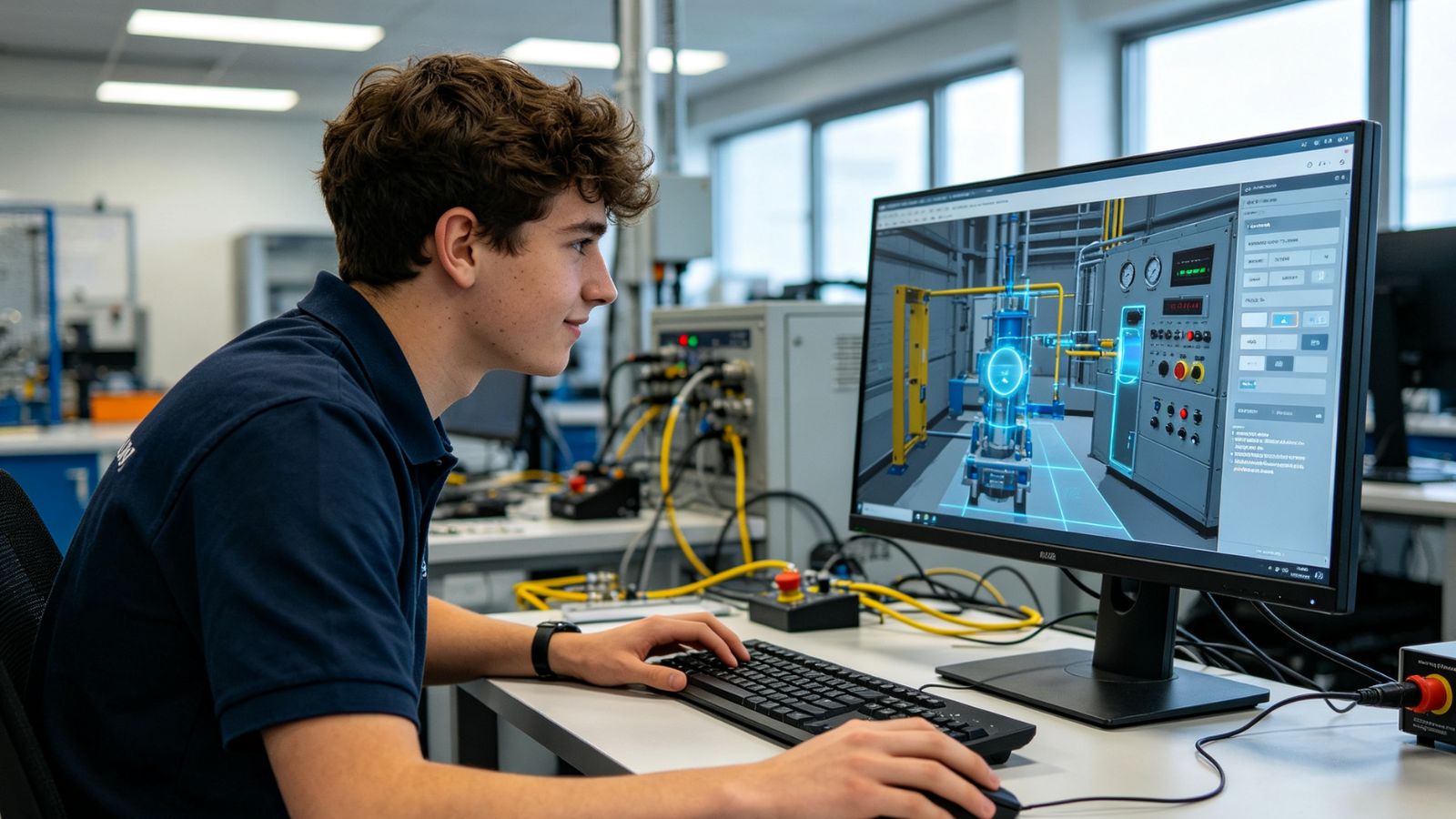
The central challenge in designing advanced digital learning systems is avoiding the insidious trap of cognitive overload. Human working memory capacity is strictly finite, meaning that every extraneous visual transition, decorative background graphic, and uncoordinated audio cue actively competes for scarce attentional resources. When instructional designers prioritize flashy aesthetic engagement over clean informational architecture, they inadvertently sabotage the very mental schemas they are attempting to construct.
To maintain optimal cognitive load, effective multi-modal frameworks establish a strict hierarchy of channels for every distinct learning activity. For instance, a complex technical demonstration should utilize video exclusively for the visual representation of the physical process, while a minimalist sidebar of text highlights essential technical vocabulary. The accompanying narration should reinforce and extend the visual demonstration rather than lazily repeating on-screen text verbatim. By eliminating channel redundancy and stripping away decorative noise, instructional designers ensure that learners invest their limited cognitive bandwidth into deep schema construction rather than filtering out distracting interface clutter.
Furthermore, seamless technical transitions between media formats are mandatory for maintaining uninterrupted mental focus. A learner who successfully completes a video demonstration should be able to transition instantly into a targeted interactive practice exercise without navigating a chaotic course directory. When reference pages, video timestamps, and practice quizzes are deeply interconnected, the digital platform dissolves into the background, allowing the learner to navigate a continuous, frictionless learning cycle.

Initial exposure to multi-modal content represents only the very beginning of the educational journey. A student can watch an exceptionally produced video demonstration and feel complete confidence while viewing it, only to experience total retrieval failure when tested on the exact same material several days later. This persistent vulnerability occurs because passive viewing and listening rely primarily on recognition memory rather than durable, independent recall.
Robust multi-modal systems systematically solve this decay by forcing immediate transitions from passive reception to active retrieval and spaced application. For example, an instructional module might introduce an abstract chemical process through a combination of written definitions and animated diagrams, immediately followed by scenario-based interactive challenges that require the learner to predict outcomes or troubleshoot anomalous experimental results. Immediate, diagnostic feedback must then explain why a given answer is correct or incorrect, correcting nascent misconceptions while the conceptual framework remains active in working memory.
Ultimately, evaluating the true success of a multi-modal learning architecture requires looking far beyond superficial engagement metrics such as video completion rates, course page views, or total time spent logged into the platform. Meaningful evaluation focuses on delayed retention, error pattern analysis, and the learner's demonstrated ability to transfer acquired concepts to entirely novel, unfamiliar problem spaces. When text, audio, video, and interactive environments are deliberately unified around these rigorous retention principles, digital learning systems transcend simple media novelties, evolving into powerful engines for durable human expertise.