
A person can spend hours studying a subject and still misunderstand how well they actually understand it. A student may finish reviewing a textbook chapter and feel prepared for an exam, only to discover during testing that recalling information independently is much harder than expected. A software developer may watch tutorials about a new programming framework and feel comfortable with the concepts, yet struggle when building a project without guidance.
These situations reveal a fundamental challenge in learning: people must evaluate knowledge that they cannot directly observe.
Unlike measuring physical performance, self-assessment depends on internal judgments. Learners use signals such as confidence, familiarity, and ease of understanding to estimate their competence. These signals can be useful, but they do not always reflect whether knowledge can be applied in unfamiliar situations.
This is where metacognition becomes important. Metacognition describes how people monitor and regulate their own thinking. It affects how learners decide what they know, what they still need to improve, and which strategies are most effective.
The difficulty is that metacognition itself requires knowledge and experience. People cannot always recognize gaps in understanding, especially in areas where they have limited expertise. Developing better self-assessment therefore requires more than reflection; it requires reliable evidence.
The concept of metacognition was introduced by developmental psychologist John H. Flavell in the 1970s. Flavell described metacognition as knowledge about one’s own cognitive processes and the ability to regulate those processes.
In learning environments, metacognition influences several important decisions:
whether a learner believes a concept has been mastered;
whether additional practice is necessary;
which learning methods should be changed;
when outside feedback or assistance is needed.
Researchers often distinguish between metacognitive monitoring and metacognitive control.
Monitoring involves judging the current state of understanding. For example, a student may recognize that they can follow a teacher’s explanation but cannot yet solve similar problems independently.
Control involves responding to that judgment. The student may decide to complete additional exercises, seek clarification, or change study methods.
The relationship between these two processes explains why some learners improve faster than others. Two people may spend equal time studying, but one person may notice ineffective habits earlier and adjust accordingly.
However, metacognition is not a perfect internal measurement system. A person can carefully evaluate their learning while still using inaccurate signals. Understanding why these errors happen is essential for building better learning strategies.
One of the most common reasons learners misjudge their ability is that the brain often interprets familiarity as understanding.
When information is encountered repeatedly, processing becomes easier. A chapter that seemed complicated during the first reading may appear simple after several reviews. This increased ease can create confidence, even when the learner has not developed the ability to recall or apply the information independently.
Psychologists have studied this problem through the concept of judgments of learning. These are predictions people make about how well they will remember information or perform on future tasks.
Research suggests that people often base these judgments on immediate learning experiences. For example, if information feels easy to read and recognize, learners may predict that they will remember it later. However, future performance often depends on whether information can be retrieved from memory when external support is removed.
This explains why passive learning activities can sometimes create inaccurate confidence. Highlighting notes, rereading articles, and watching explanations may improve familiarity, but they provide limited evidence about independent performance.
Consider someone learning a foreign language. After reviewing vocabulary lists several times, the words may appear familiar. However, speaking with another person requires retrieving those words quickly, placing them into sentences, and adapting to unexpected responses. Recognition is only one part of practical ability.
The same problem appears outside academic settings. Consider a manager who completes a leadership training program and feels confident after understanding concepts such as active listening, feedback methods, and conflict resolution strategies. The information may seem clear during the course because the examples and explanations are familiar. However, applying those ideas during a difficult workplace conversation requires additional skills, such as recognizing emotional responses, adapting communication style, and making decisions under pressure.
In this situation, the gap is not caused by a lack of effort or intelligence. The learner has acquired information but has not yet developed enough experience applying that knowledge in complex situations. Real competence often appears when people must transfer what they know into unfamiliar environments.
Reliable self-assessment requires learning activities that reveal what a person can actually do, not only what appears familiar.
The relationship between confidence and competence became widely discussed after the 1999 research conducted by David Dunning and Justin Kruger.
Their study examined how accurately people evaluated their own abilities in areas including logical reasoning, grammar, and humor. They found that participants with lower performance levels often had difficulty recognizing their own limitations.
The explanation is closely related to metacognition: evaluating performance often requires some understanding of what good performance looks like. Beginners may not yet possess enough knowledge to identify mistakes that are obvious to more experienced individuals.
However, the Dunning-Kruger effect is often oversimplified. It does not mean that people with less experience are always overconfident or that experts always evaluate themselves accurately.
Self-assessment depends on many factors:
how clearly performance standards are defined;
whether useful feedback is available;
how complex the task is;
whether the person has experience with similar situations.
Experts can also misjudge their competence. A professional who has performed a familiar task successfully for years may overlook changes in their field or assume that previous success automatically transfers to new challenges.
The effect describes difficulties in self-evaluation under certain conditions rather than a permanent characteristic that defines particular groups of people.
The broader lesson is that confidence becomes more reliable when it is connected to external evidence. Experience, feedback, and objective evaluation help people develop more accurate judgments about their abilities.
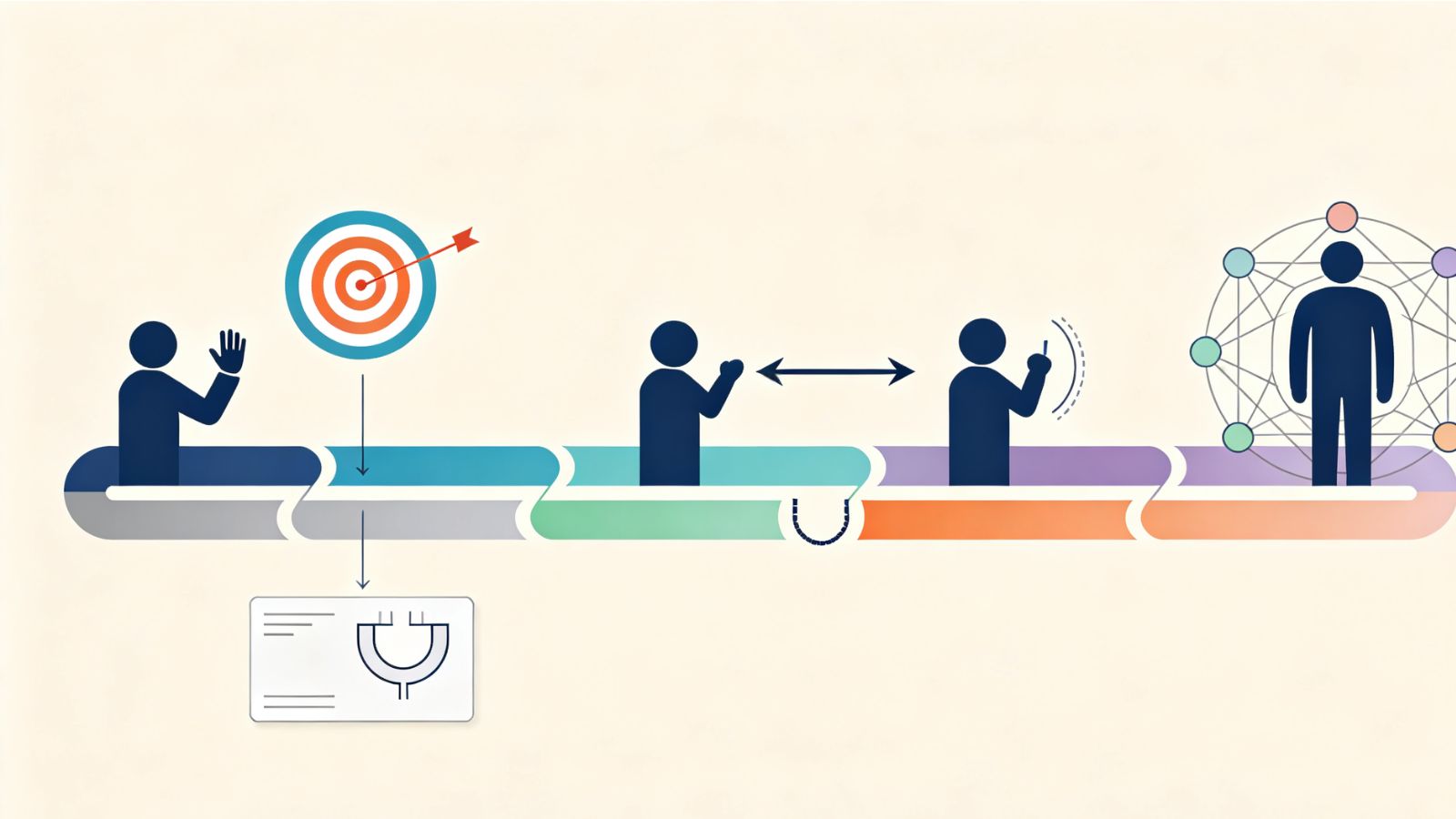
Self-assessment becomes more accurate when learners compare their expectations with actual outcomes.
Without feedback, people have limited information about whether their judgments are correct. They may remember successful experiences more easily than failures or fail to notice repeated mistakes.
A useful concept in learning research is calibration: the degree to which confidence matches actual performance.
For example, a student might predict a high score on an exam because the material feels familiar during review. After receiving the result, the difference between expectation and outcome provides valuable information. The student can examine whether the problem came from weak memory, incomplete understanding, or ineffective preparation methods.
Research on the testing effect has changed how psychologists understand the role of assessment in learning. Studies by Henry L. Roediger III and Jeffrey D. Karpicke demonstrated that actively retrieving information from memory can improve long-term retention more effectively than repeated review alone.
The significance of this finding is that testing is not merely a final measurement of what a learner already knows. The act of retrieval itself strengthens memory and reveals weaknesses that passive study methods often hide. A learner who struggles to recall an idea during practice is receiving valuable information about where understanding is incomplete.
This changes the way assessments can be viewed. A quiz, practice exercise, or self-test is not only a tool for judging performance after learning has occurred; it can become part of the learning process by helping people identify gaps and reinforce knowledge at the same time.
Feedback is most useful when it leads to adjustment. A disappointing result provides limited benefit if the learner simply moves on. Reviewing mistakes and changing future approaches transforms evaluation into improvement.
Improving metacognitive accuracy requires replacing assumptions with stronger evidence.
One effective approach is retrieval practice. Instead of repeatedly reviewing information, learners can attempt to reconstruct ideas from memory. Writing a summary without notes, answering practice questions, or explaining a concept aloud can reveal whether knowledge is truly available.
Another useful strategy is the teach-back method. When learners explain a concept using their own words, they must organize information and identify connections between ideas. Difficulties during explanation often reveal gaps that remain hidden during reading.
Prediction exercises can also improve self-awareness. Before completing an assignment or assessment, learners can estimate their expected performance and identify areas of uncertainty. Comparing predictions with actual results over time helps improve judgment accuracy.
These approaches work because they create a feedback loop:
The learner makes a judgment about their ability.
They perform a task that provides evidence.
They compare expectations with results.
They adjust future learning strategies.
Over time, this process helps people develop a more realistic understanding of their strengths and limitations.
Although metacognition is valuable, it should not be misunderstood as constant self-questioning.
Some learners may become overly focused on analyzing their performance and spend more time worrying about mistakes than improving skills. Effective metacognition is practical. It helps people decide what action to take next.
There are also situations where external evaluation remains essential. In fields such as engineering, science, and healthcare, personal confidence cannot replace professional standards, testing procedures, and peer review.
The purpose of self-assessment is not to create perfect certainty. Human judgment will always have limitations. The goal is to develop better systems for recognizing uncertainty and responding to it effectively.
A learner who understands where their knowledge ends has an advantage because they know when to investigate further, ask questions, or change strategies.

Metacognition does not remove uncertainty from learning. Even experienced learners will sometimes overestimate what they understand or underestimate what they are capable of achieving. The difference is that skilled learners develop better ways to detect these errors.
A learner who regularly compares expectations with actual performance is more likely to notice misunderstandings before they become persistent problems. They can adjust study methods, seek feedback earlier, and make more informed decisions about where to invest effort.
The value of self-assessment is not perfect accuracy. Human judgment will always have limits. Its practical purpose is to create a habit of checking assumptions against evidence, allowing learners to respond to mistakes with adjustment rather than repetition.
In the long term, this ability supports more than academic success. It helps people continue learning in environments where knowledge, technology, and professional demands constantly change.