
Many people learn by concentrating on one topic for a long period. A student may complete an entire chapter of math problems before moving to the next subject, an athlete may repeat the same drill for hours, or a musician may practice one technique until it feels comfortable. This approach, known as blocked practice, can create a strong sense of progress because improvement is often noticeable during the session.
However, learning that feels easier is not always learning that lasts. Research in cognitive psychology suggests that interleaving strategies, which involve alternating between related topics or skills, can improve long-term retention and help learners recognize patterns more effectively. Instead of repeatedly practicing one type of task, learners must identify differences, select appropriate methods, and retrieve knowledge in changing situations.
Interleaving does not make learning effortless. In many cases, it makes practice feel more difficult because learners cannot rely on repetition alone. That difficulty can be valuable because it encourages deeper thinking and prepares people to use knowledge when the situation is unfamiliar.
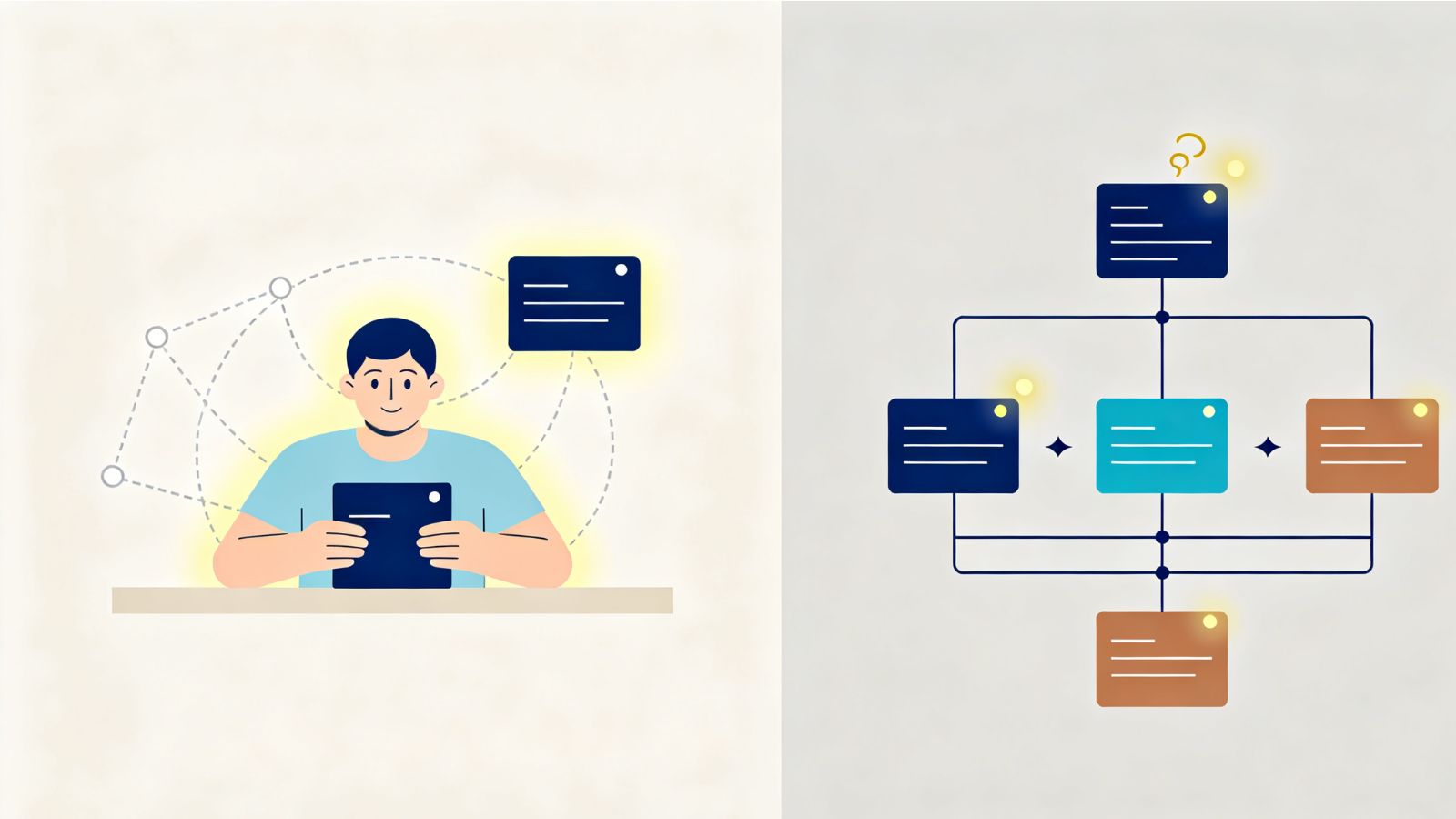
Interleaving is a learning approach where different but connected skills or concepts are mixed together during practice. Rather than completing all examples of one category before moving to another, learners switch between multiple categories and must determine which method or knowledge applies each time.
For example, a student studying mathematics may practice different types of problems in one session instead of solving dozens of identical equations in a row. A language learner might alternate between vocabulary, grammar, and reading comprehension rather than spending an entire study period on only one area. The goal is not simply to cover more material, but to train the brain to recognize what type of challenge it is facing.
The difference between interleaving and traditional blocked practice is the amount of decision-making involved. When similar tasks are repeated continuously, the correct approach often becomes obvious. A learner may perform well because the previous example provides a clue about what to do next, but that familiarity does not always mean the underlying skill has been fully understood.
Interleaving removes that shortcut. Before solving a problem or completing a task, learners must first identify the nature of the challenge and select an appropriate strategy. This process can strengthen pattern recognition because the learner is practicing not only the skill itself, but also the ability to determine when and how that skill should be used.
Pattern recognition is one of the foundations of expertise. Experienced professionals often appear to make quick decisions, but their speed usually comes from recognizing meaningful patterns developed through extensive practice.
Interleaving can strengthen this ability by encouraging learners to compare similarities and differences during practice. When related concepts appear close together, the brain has an opportunity to notice what separates one situation from another. Instead of only remembering a solution, learners begin to understand the conditions that determine which solution is appropriate.
For example, a medical student learning about diseases does not only need to memorize symptoms. Many medical conditions share similar signs, so effective diagnosis requires recognizing subtle differences and deciding which information matters most. Studying related cases together can encourage this type of comparison-based thinking.
The same principle applies to physical and creative skills. A tennis player who practices only one type of serve may improve the movement itself, but competition requires choosing the right serve based on the opponent, score, and situation. A musician may know individual techniques but still need practice switching between styles, rhythms, or pieces during a performance.
Research has provided evidence that interleaved practice can improve learners’ ability to select appropriate strategies. In a 2011 study published in Applied Cognitive Psychology, researchers Doug Rohrer and Kelli Taylor found that students who practiced mixed mathematics problems showed better performance on later tests compared with students who practiced problems in a blocked sequence. The researchers suggested that interleaving helped students learn to identify which procedure was needed instead of simply repeating a familiar pattern.
Other studies have reported similar benefits in areas such as visual classification and motor learning. When learners encounter different examples together, they may become better at identifying distinguishing features rather than memorizing a fixed sequence. However, these results do not mean interleaving improves every type of learning automatically. The effectiveness of the method depends on factors such as the learner’s experience, the complexity of the material, and how the practice is designed.
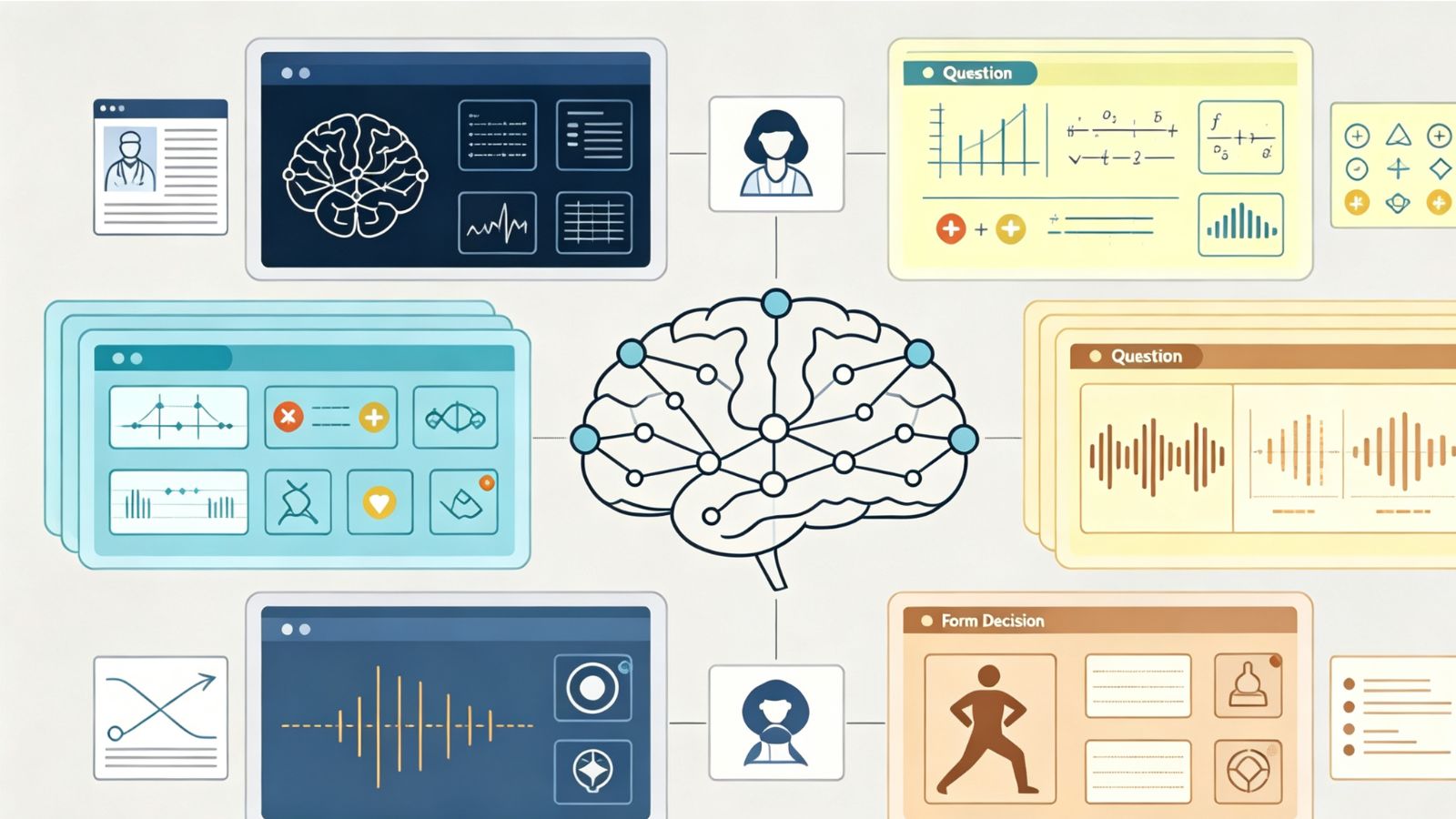
One reason interleaving may improve retention is that it strengthens retrieval. When learners return to a topic after working on something else, they must reconstruct the information instead of relying on what is still active in short-term memory.
This process creates a useful challenge. Learning activities that require more mental effort can sometimes produce stronger memories because the learner has to actively retrieve and organize information. Although practice may feel less comfortable, the knowledge can become easier to access later.
Interleaving also naturally introduces spacing between encounters with the same concept. Instead of repeating the same skill many times in a short period, learners revisit it after working on something different. This combination of variation and spacing can reduce the risk of confusing familiarity with true understanding.
For example, a student preparing for a statistics exam may spend hours practicing regression calculations because the process feels familiar and predictable. During the actual exam, however, the difficult part may not be performing the calculation itself. The real challenge may be deciding whether regression is the correct tool or whether another method, such as probability analysis or comparison of distributions, is more appropriate.
Interleaved practice focuses on this decision-making step. By mixing related problems together, students practice identifying which approach fits the situation instead of simply following the same procedure repeatedly.
A common mistake is judging a learning method only by how it feels during practice. This is understandable because smooth performance creates a sense of confidence. However, the ability to perform well during a study session and the ability to remember or transfer knowledge later are not always the same.
Blocked practice often produces immediate improvement because the learner receives repeated exposure to the same pattern. Interleaving may feel slower because each new task requires additional thinking. Yet this effort can better reflect the conditions people face outside practice sessions, where problems rarely appear with instructions attached.
The value of interleaving is not simply making practice more challenging. Its purpose is to develop the ability to identify useful information, choose an effective approach, and apply knowledge when familiar cues are missing.
At the same time, interleaving should not replace all forms of focused practice. Beginners often need repetition to establish basic knowledge and coordination. A person learning a new musical instrument may need repeated practice of finger positions before combining multiple techniques. A new athlete may need consistent repetition before performing a movement under changing conditions.
The most effective approach is usually a combination: focused practice helps establish the foundation, while interleaving helps learners adapt and apply what they know.
Successful interleaving requires thoughtful organization. Simply mixing unrelated activities together does not automatically create better learning. The most effective approach is to alternate between topics that are connected enough to compare but different enough to require a choice.
For students, this may mean reviewing several related chapters during one study session instead of completing one chapter from beginning to end. A history student might compare different political movements during the same review period, while a science student might practice deciding when different formulas or concepts apply.
Professionals can also use interleaving when developing complex skills. A programmer may alternate between different types of coding problems instead of repeating one solution pattern. A writer may practice different forms of communication, such as explanations, reports, and summaries, to develop greater flexibility.
However, learners should introduce variation at the right stage. When a concept is completely unfamiliar, too much switching can create unnecessary confusion because the basic structure has not yet been established. Once the fundamentals are understood, introducing different examples and situations becomes more useful.
Feedback is another important part of the process. Because interleaving often produces more mistakes during practice, learners need opportunities to identify errors and understand why a particular approach worked or failed. Without feedback, difficulty alone does not guarantee improvement.
The goal is not to make every practice session harder. The goal is to create the type of thinking required when knowledge must be used without clear instructions.
One reason people avoid interleaving is that it can make progress feel slower. When practicing the same task repeatedly, improvement is easy to observe because performance becomes smoother. Mixed practice often feels less successful because learners spend more time struggling with decisions.
Real-world problems rarely appear in predictable sequences. Students encounter unfamiliar exam questions, employees face new workplace situations, and athletes must respond to changing conditions. In these situations, the ability to identify useful signals and select the right approach matters more than simply repeating a familiar routine.
For anyone building expertise, the most important benefit of interleaving is not faster practice performance, but improved adaptability. Learners become better prepared to recognize unfamiliar problems and choose appropriate responses when guidance is unavailable.
By alternating related subjects and skills, people can move beyond memorization and develop knowledge that transfers to new situations. Interleaving supports a form of learning that is more flexible, durable, and closer to how skills are actually used in everyday life.