
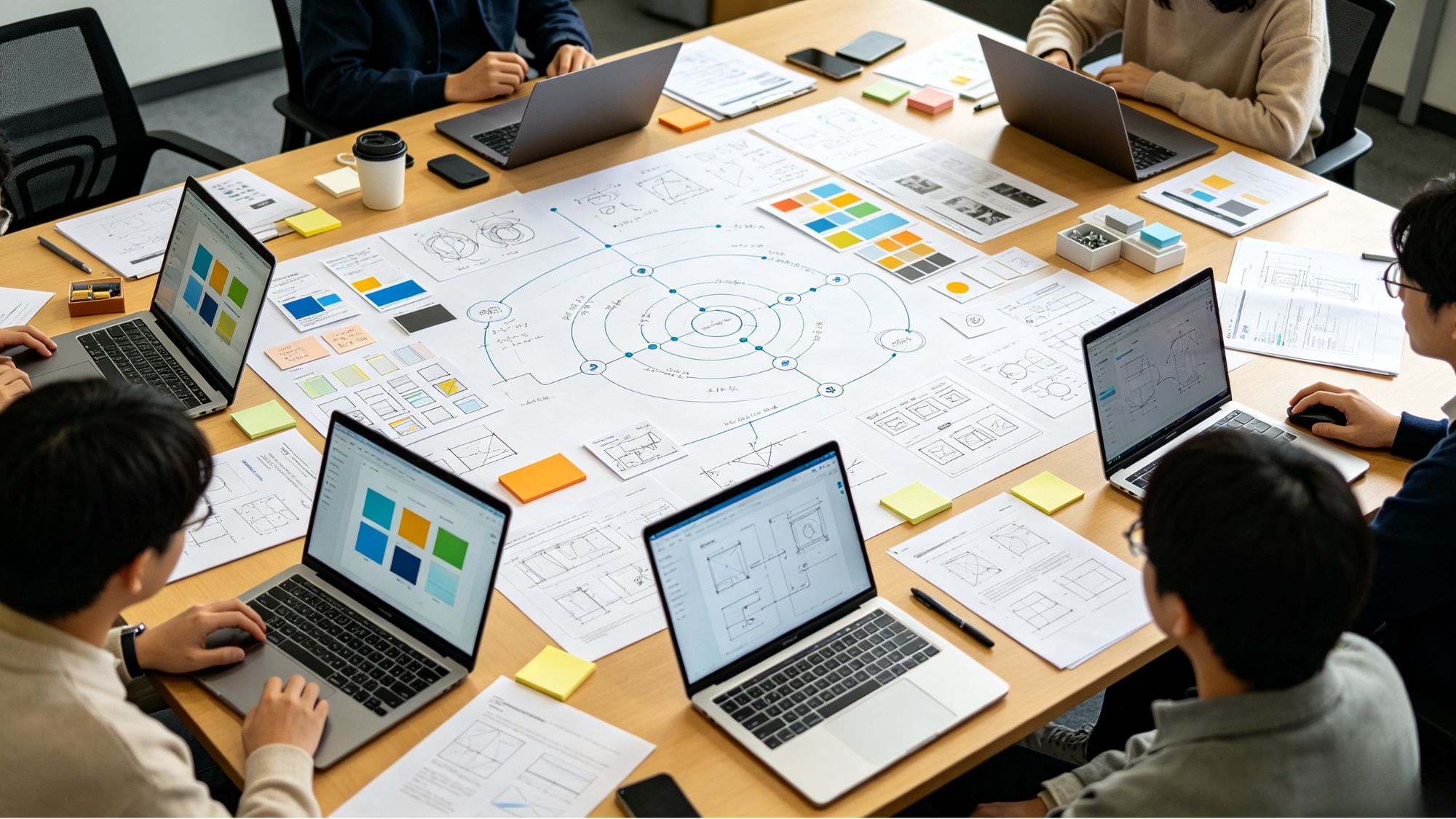
Traditional education often separates learning from application. Students study concepts in isolated subjects, complete assignments with clearly defined requirements, and prepare for examinations where the expected answers are usually known in advance. This approach can help build foundational knowledge, but it does not always prepare learners for situations where problems are unclear, resources are limited, and decisions must be made without perfect information.
In professional environments, people rarely receive complete instructions or perfectly structured problems. Engineers troubleshoot unexpected failures, developers work with changing requirements, and designers balance user needs with technical limitations. Project-based learning systems address this gap by placing learners inside realistic challenges where knowledge must be applied rather than simply remembered.
By introducing real-world constraints, project-based learning transforms abstract information into practical experience. Deadlines, limited resources, and imperfect conditions become tools that encourage deeper problem-solving, stronger decision-making, and long-term skill development.
A common assumption is that easier learning environments create faster progress. However, removing every difficulty can sometimes reduce the mental effort required to develop new abilities.
When learners face meaningful constraints, they are forced to make decisions, evaluate alternatives, and adjust their strategies. These processes create stronger connections between knowledge and practical application.
For example, a beginner programmer following tutorials may learn how to write code by copying examples. However, when that same person builds a small website for an actual user, the learning process changes. They must decide how to organize the project, understand unclear requirements, fix unexpected errors, and consider how other people will use the final product.
The challenge itself becomes part of the learning process.
Real-world constraints support skill development in several ways:
They encourage prioritization.
Without limitations, learners can spend excessive time improving minor details or expanding project ideas without direction. A deadline or resource limit forces them to identify the most important tasks and focus on high-value skills.
They create meaningful feedback.
In traditional exercises, a mistake may only result in a lower score. In a real project, an incorrect decision may cause a feature to fail, a user experience problem to appear, or a deadline to be missed. These consequences provide clearer feedback about what needs improvement.
They improve knowledge retention.
Information connected to a specific challenge is often easier to remember because learners understand not only what they learned but also why it mattered.

Not every project creates meaningful learning. A poorly designed project can become just another task to complete rather than an opportunity to develop expertise.
For example, creating a simple practice application with no real purpose may teach basic technical skills, but it may not require learners to think deeply about user needs, quality standards, or long-term decisions.
Effective project-based learning usually includes three important elements.
A useful project should solve a realistic problem or produce something that has practical value.
A design student might create a user interface for a real community organization. A business student might analyze a local company’s customer challenges. A developer might build a tool that improves an existing workflow.
When learners understand who benefits from their work, they are more likely to care about accuracy and quality.
Real projects rarely provide all necessary information from the beginning.
Learners may need to research missing details, compare different solutions, and handle changing expectations. These situations develop skills that are difficult to practice through highly controlled exercises.
For instance, a product designer may begin with a basic request such as “make an app easier to use.” The challenge is not simply creating screens but discovering what users actually need, which problems matter most, and how design choices affect the overall experience.
Large projects can become overwhelming if learners only focus on the final result.
Breaking projects into smaller stages allows learners to build confidence while understanding how individual decisions influence later outcomes.
A software project, for example, may move through stages such as planning, prototype development, testing, and improvement. Each stage creates new feedback and helps learners understand the complete development process.

Although realistic projects accelerate learning, too much complexity too quickly can create unnecessary frustration.
When beginners must simultaneously learn new concepts, manage deadlines, solve technical problems, and make strategic decisions, their ability to process information can become limited.
Effective project-based learning systems solve this problem through structured support.
Early projects often provide more guidance:
Clear examples of expected outcomes
Limited project scope
Access to feedback from instructors or experienced professionals
As learners gain confidence, the level of independence gradually increases. Projects can introduce more uncertainty, larger goals, and fewer instructions.
This gradual increase in difficulty allows learners to develop problem-solving abilities without becoming overwhelmed.

The ultimate purpose of project-based learning is not simply completing individual projects. The deeper goal is developing the ability to handle unfamiliar situations.
A learner who only repeats the same type of project may become skilled in a narrow area but struggle when conditions change. To develop flexible expertise, projects should gradually introduce new environments and challenges.
A programmer who has only built simple websites may eventually need to work with complex systems. A marketing student who has analyzed one type of customer group may need to adapt strategies for a completely different audience.
By exposing learners to different constraints, project-based systems help develop adaptability—the ability to transfer existing knowledge to new problems.

Project-based learning works because it connects knowledge with meaningful action. Instead of memorizing information without context, learners develop skills by applying ideas, solving problems, and responding to real consequences.
Real-world constraints are not barriers to learning. When designed properly, they provide the challenges that encourage deeper understanding, stronger decision-making, and long-term improvement.
The most effective learning environments do not remove every difficulty. They create the right level of challenge, provide useful feedback, and gradually prepare individuals to solve increasingly complex problems in the real world.