
Learning complex subjects requires more than simply providing more information. When learners struggle with advanced concepts, the problem is not always a lack of effort or motivation. In many cases, the amount and organization of information placed on working memory can determine whether learning becomes effective or overwhelming.
Cognitive load theory provides a framework for understanding how people process new information. Developed by educational psychologist John Sweller in the 1980s, the theory suggests that working memory has limited capacity, and instructional design should account for these limitations. Later research in instructional design and multimedia learning further explored how presentation methods, examples, and learner experience influence cognitive processing.
Research on cognitive load theory has influenced instructional design research for decades, particularly in areas such as multimedia learning, worked examples, and educational technology. Later research expanded discussions around how learners process information through visual explanations, guided practice, and structured problem-solving activities.
A key part of cognitive load management is separating three types of mental effort: intrinsic load, extraneous load, and germane load. Understanding the difference helps educators, instructional designers, and learners create better conditions for mastering complicated material.
Human working memory can only handle a limited amount of new information at one time. When learners encounter too many unfamiliar concepts, instructions, or details simultaneously, they may struggle to organize information into meaningful patterns.
Long-term learning depends on building schemas, which are mental structures that help people store and retrieve knowledge. For example, an experienced programmer does not process every line of code as an isolated symbol. Instead, they recognize patterns, structures, and common programming concepts that reduce the mental effort required for problem-solving.
Cognitive load management does not mean reducing difficulty. Challenging material is often necessary for deeper learning. The goal is to ensure that mental effort is directed toward understanding rather than being wasted on confusing explanations, unnecessary information, or poorly designed learning environments.
Intrinsic load refers to the mental effort required by the subject matter itself. It is determined by the number of interacting elements that learners must understand at the same time.
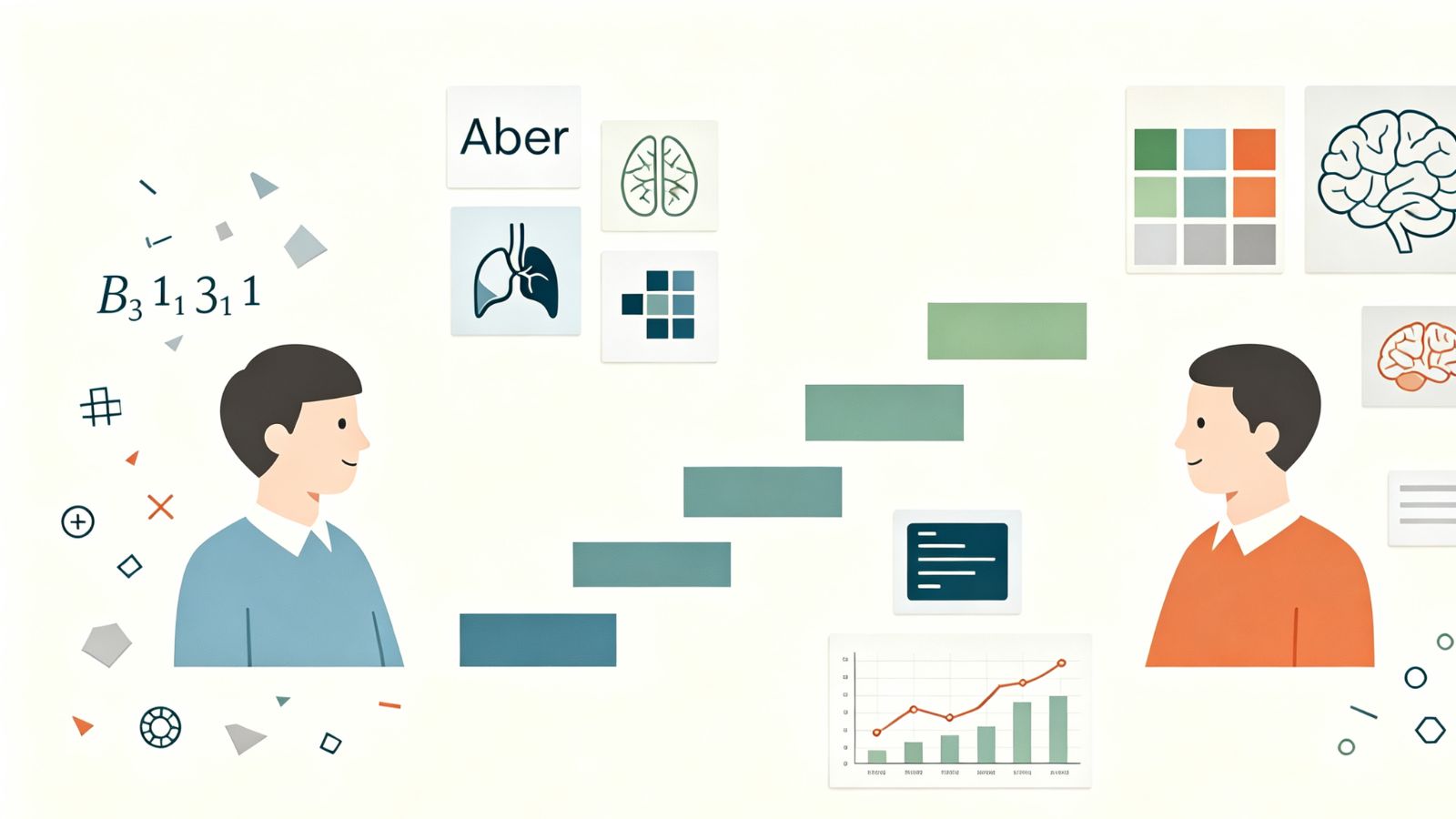
For example, learning basic vocabulary in a foreign language may involve memorizing individual words. Learning to hold a conversation requires understanding vocabulary, grammar, pronunciation, context, and cultural meaning simultaneously. The second task has a higher intrinsic load because more elements interact.
Intrinsic load is also influenced by the learner’s prior knowledge. A beginner studying algebra may find equations overwhelming because each step requires conscious attention. An experienced mathematician may process the same problem more efficiently because existing knowledge reduces the mental effort required.
This distinction is important because educators cannot simply remove intrinsic complexity from advanced subjects. A medical student, engineer, or software developer must eventually learn complicated systems. Instead, instruction can manage intrinsic load by introducing concepts gradually and building foundational knowledge before presenting more complex relationships.
For example, an online course teaching data science might first explain basic statistics, then introduce machine learning concepts, and finally move into advanced models. This sequencing allows learners to develop the necessary background before facing higher levels of complexity.
A medical student learning anatomy may experience high intrinsic load because multiple systems must be understood together. Learning the structure of the human body requires connecting organs, biological functions, terminology, and relationships between different systems. Effective instruction often breaks these elements into smaller groups before requiring learners to understand the full interaction between them.
Language-learning platforms such as Duolingo use similar instructional approaches by breaking language acquisition into micro-lessons. By isolating vocabulary from complex syntax in early exercises, the platform helps manage the initial complexity faced by beginner learners, allowing them to build foundational confidence before tackling more advanced conversational rules.
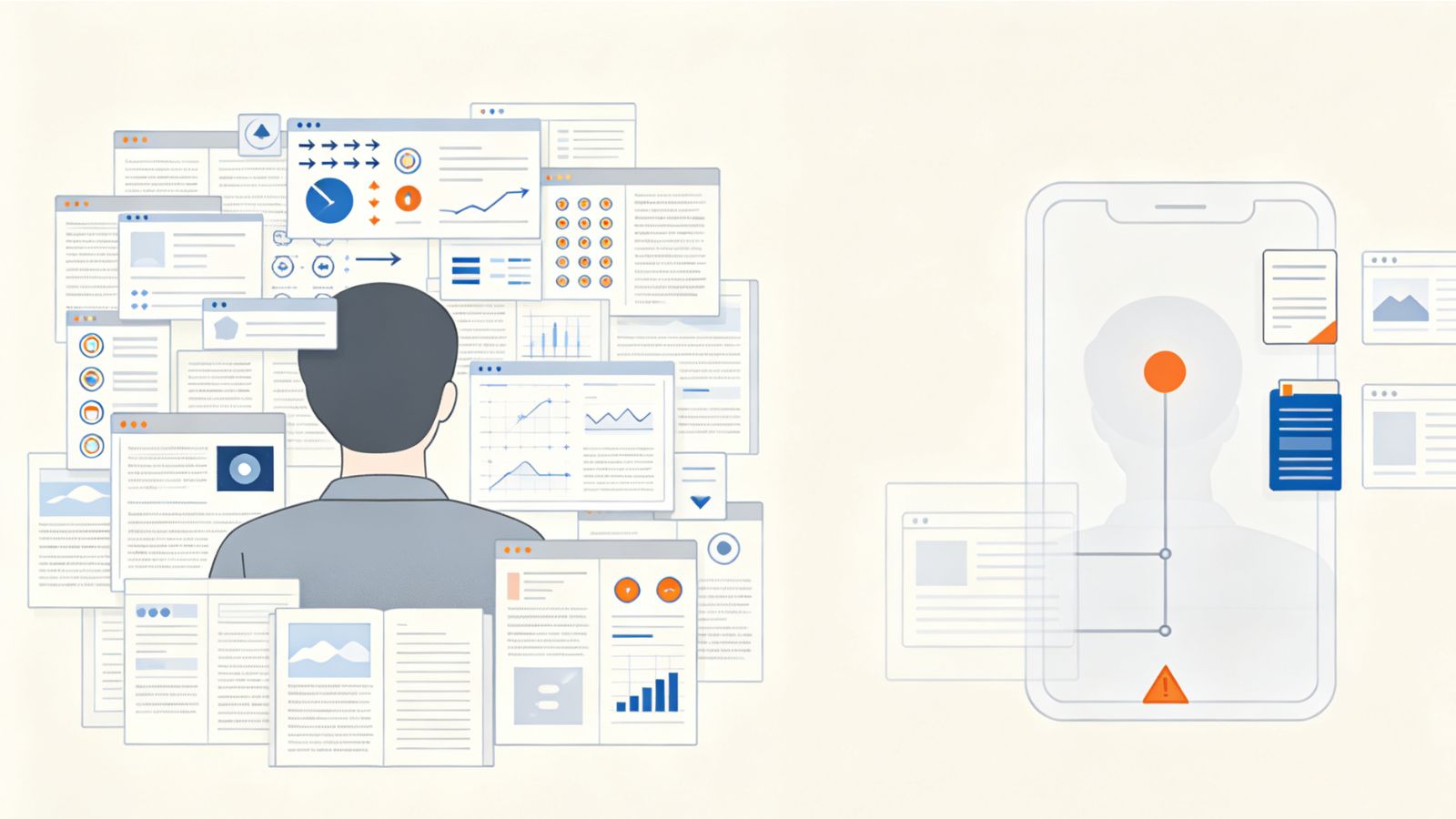
While intrinsic load comes from the difficulty of the subject, extraneous load comes from the way information is presented. This type of cognitive load does not contribute to learning and can reduce a learner’s ability to understand important concepts.
Poor instructional design often increases extraneous load. Examples include:
Presenting too much irrelevant information;
Using confusing diagrams;
Adding decorative visuals that distract from the main idea;
Providing unclear instructions;
Requiring learners to search for essential information across multiple sources.
Consider a technical training video that explains a complicated process while displaying unrelated animations, background music, and dense text on the screen. The learner must spend mental energy filtering unnecessary elements instead of focusing on the concept being taught.
Reducing extraneous load does not mean making content simplistic. A well-designed explanation can still be detailed while removing unnecessary barriers.
For instance, a programming tutorial may improve learning by showing a short code example, explaining each step, and highlighting the relationship between different components. A poorly designed tutorial might include excessive commentary, unrelated examples, and unclear navigation that forces learners to manage additional mental demands.
Germane load describes the mental effort involved in creating, organizing, and strengthening knowledge structures. Unlike extraneous load, which interferes with learning, germane load supports meaningful understanding.
When learners compare examples, explain concepts in their own words, solve problems, or connect new information with existing knowledge, they are engaging in deeper processing.
For example, a student learning physics may memorize formulas temporarily, but true understanding develops when they can explain why a formula works, recognize when to apply it, and connect it to real-world situations.
Instructional strategies that encourage germane load include:
Practice with feedback;
Problem-solving activities;
Self-explanation techniques;
Examples that gradually increase in difficulty;
Opportunities to apply knowledge in different situations.
However, increasing germane load is not simply about adding more activities. If learners are already overwhelmed by excessive information, additional exercises may increase total cognitive pressure rather than improve understanding.
Effective learning design balances challenge with support.
The three categories of cognitive load are interconnected. A lesson with difficult material may still succeed if unnecessary distractions are removed and learners receive appropriate guidance.
For educators and instructional designers, practical strategies include:
Complex subjects are often easier to understand when information is introduced in manageable stages. This approach, sometimes called scaffolding, allows learners to develop foundational knowledge before moving toward more advanced tasks.
Worked examples can reduce the mental effort required from beginners by showing how experts approach a problem. Over time, learners can gradually transition from following examples to solving problems independently.
More content does not always produce better learning. Additional explanations, graphics, or resources should serve a clear purpose. If extra material does not improve understanding, it may increase extraneous load.
The same lesson may affect beginners and experts differently. A detailed explanation that helps a new learner may become unnecessary for someone with extensive background knowledge.
Personalized learning systems increasingly attempt to address this issue by adjusting difficulty levels and providing different forms of support based on learner progress.
Cognitive load management applies to many areas beyond schools and universities. Companies use these principles when designing employee training, safety programs, and professional development courses.
For example, a manufacturing company training workers on new equipment must balance technical complexity with clear instructions. Too little information may create safety risks, while too much poorly organized information may prevent employees from remembering critical procedures.
The same principles apply to software documentation, online courses, customer education materials, and professional certification programs. In each case, the challenge is helping people process complex information efficiently.
Product designers and software developers also rely heavily on these principles through Progressive Disclosure—a UI design approach commonly found in modern software products, including many interfaces developed by companies such as Apple and Google. By showing users only the most essential tools first and hiding advanced settings until needed, applications minimize unnecessary cognitive friction and prevent user overwhelm during onboarding.
Although cognitive load theory has influenced educational research and instructional design, it is not a complete explanation of learning. Human learning is affected by many factors, including motivation, emotion, social interaction, prior experience, and individual differences.
Researchers have also debated how cognitive load categories should be measured and applied in different learning environments. For this reason, cognitive load theory is best viewed as one useful framework among several approaches to understanding learning.
It provides practical guidance, but it does not replace careful evaluation of learners, teaching methods, and learning goals.
Managing cognitive load is ultimately about directing attention toward the parts of learning that matter most. Intrinsic load reflects the complexity of the subject itself. Extraneous load represents unnecessary difficulty created by poor design. Germane load describes the mental effort used to build lasting understanding.
A well-designed learning experience does not eliminate complexity; it helps learners spend their limited attention on the concepts and skills that matter most.
Whether in classrooms, online platforms, workplace training, or digital products, effective cognitive load management creates better conditions for people to understand difficult information and apply knowledge with greater confidence.